Bulawayo to Victoria Falls: The Journey to the Smoke That Thunders
You hear it long before you see it. How to travel from Bulawayo to Victoria Falls, when to go, and what to do once the spray reaches you.
By BlueRoof · 13 October 2026 · 4 min read
Travelling from Bulawayo to Victoria Falls means a journey of about 440 km north-west: roughly five to six hours by road through Hwange, or a short flight. Break the journey in Bulawayo and you arrive rested, unhurried and ready to be undone by it.
Because that is what happens. You hear Victoria Falls long before you see it, a low roar that settles somewhere in your chest. Then the spray rises above the trees like smoke, and you understand the old name instantly.
What makes Victoria Falls worth the journey?
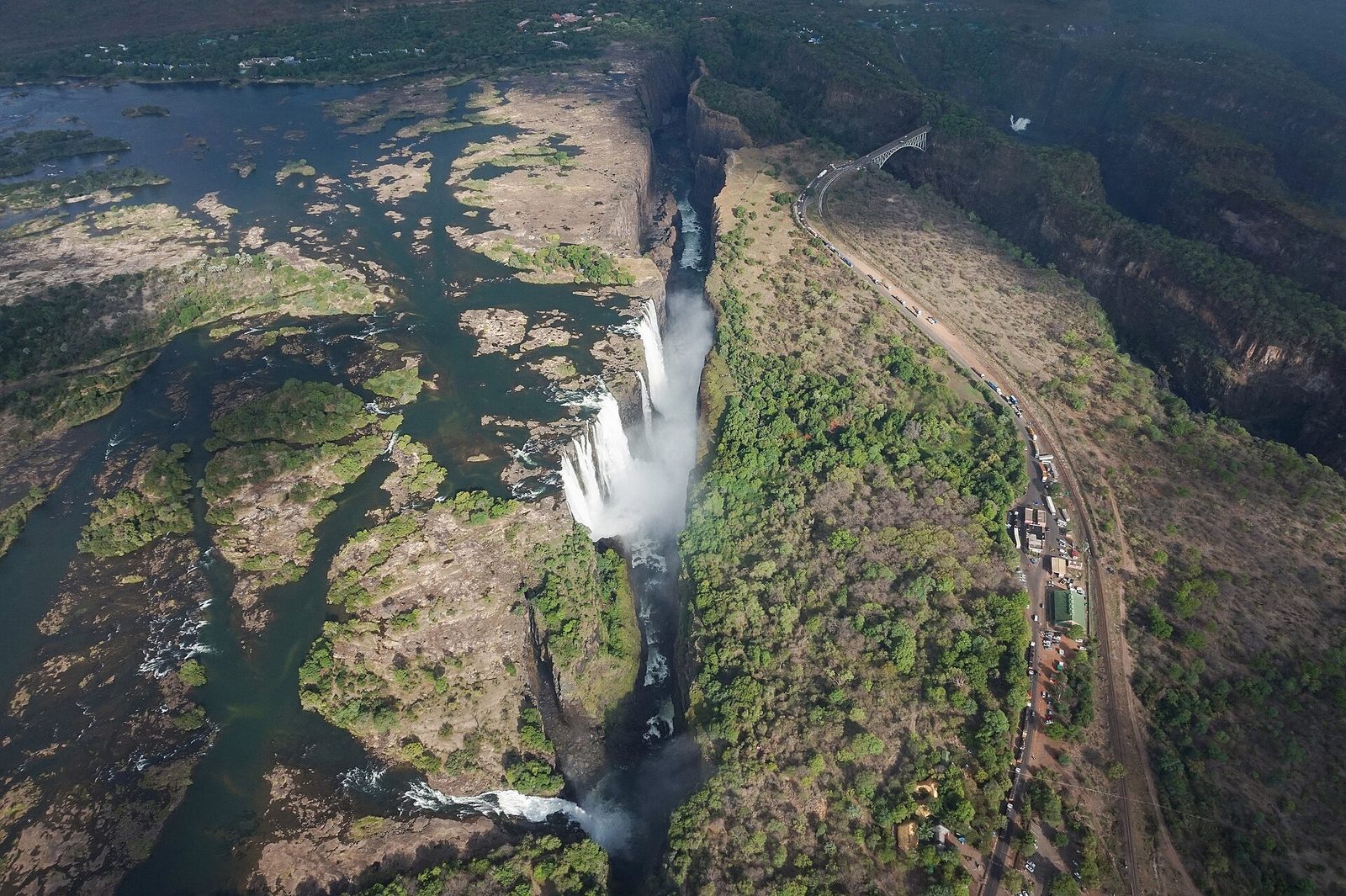
Locally the Falls are called Mosi-oa-Tunya, "the smoke that thunders". The Zambezi River, more than a kilometre and a half wide at this point, drops over 100 metres into a narrow basalt gorge. The result is one of the largest curtains of falling water on Earth, and a cloud of mist that can be seen from kilometres away.
It is a shared wonder, too. The Falls sit on the border between Zimbabwe and Zambia, and together they form the Mosi-oa-Tunya / Victoria Falls World Heritage Site, listed by UNESCO in 1989.
Numbers never quite capture it. Standing on the Zimbabwean side, soaked to the skin, with a rainbow arched beneath your feet, you will stop thinking about numbers altogether.
How do you get from Bulawayo to Victoria Falls?
There are three main ways, and each suits a different kind of traveller.
| Option | Time | Best for |
|---|---|---|
| Self-drive on the Bulawayo–Victoria Falls road | About 5–6 hours | Freedom, and a stop in Hwange National Park |
| Coach or shuttle | About 6–7 hours | Relaxed travellers on a budget |
| Flight to Victoria Falls Airport | Under 1 hour flying | Short trips and tight schedules |
The rail line between Bulawayo and Victoria Falls has a long history, and an overnight train has carried travellers on this route for generations. Services change, so check current schedules with National Railways of Zimbabwe before planning around it.
Driving tips for the road north
- Leave early and arrive in daylight. Animals, including elephants, cross the road near Hwange, and potholes are easier to see in good light.
- Fill up when you can. Fuel is available in Bulawayo, Hwange and Victoria Falls, but stations can be far apart.
- Carry your licence and vehicle papers. Police checkpoints are common, and officers are generally courteous to prepared drivers.
- Pack snacks, water and patience. This is a road to enjoy, not to race.
Where to pause on the way
The drive is long enough to deserve a pause. Hwange town makes a sensible fuel and coffee stop, and if you have a spare day, a detour into Hwange National Park turns a transfer into a safari. Even a single afternoon game drive changes the feel of the whole trip. Keep an eye on the baobabs as you head north, too. They seem to multiply the closer you get to the Zambezi.
When is the best time to see Victoria Falls?
It depends on what you want to feel.
High water, roughly March to May, is pure spectacle. The river is at its fullest, the spray towers above the gorge and you will be drenched on the viewing paths. Views can be partly hidden by mist, but the sheer force is unforgettable.
Low water, roughly September to December, reveals the rock face and the shape of the gorge. Flow on the Zambian side can shrink dramatically, but the Zimbabwean side keeps its water year-round, and photographs are clearer.
June to August sits in between, with strong flow, cooler days and good visibility. Many travellers find it the sweet spot.
If your dates line up with a full moon, ask about the lunar rainbow tours. Seeing a silver arc hanging over the Falls at night is something people describe for the rest of their lives.
What can you do at Victoria Falls?
Plenty, from the gentle to the frankly terrifying.
- Walk the rainforest trail on the Zimbabwean side, stopping at each viewpoint. Bring a rain jacket or simply accept you will get wet.
- Take a sunset cruise on the upper Zambezi, watching hippos surface and the sky go copper.
- See the Falls from above on a helicopter or microlight flight.
- Visit the Victoria Falls Bridge, built in 1905, for views down the gorge and, if you dare, a bungee jump.
- Raft the Zambezi below the Falls when water levels allow. It is world-famous for a reason.
Make Bulawayo part of the story
Bulawayo is the natural gateway to western Zimbabwe. Staying a night or two before you head north gives you time to explore the Matobo Hills, wander the city and start the long drive fresh.
At BlueRoof, check-in is from 14:00 and checkout is by 10:00, which fits an early departure neatly. Let reception know the night before if you are leaving early. Browse our rooms, check availability, or read our practical travel tips for western Zimbabwe before you go.
Cover photo: Victoria Falls, Zimbabwe, by Bernard Gagnon via Wikimedia Commons, CC BY-SA 4.0.
Frequently asked questions
- How far is Victoria Falls from Bulawayo?
- Victoria Falls is about 440 km north-west of Bulawayo, roughly five to six hours by road via Hwange.
- What is the best month to visit Victoria Falls?
- March to May shows the Falls at full power, September to December reveals the gorge, and June to August offers a balance of strong flow and good visibility.
- Can you drive from Bulawayo to Victoria Falls?
- Yes. The main road is well travelled. Leave early, drive only in daylight, fill up with fuel when you can and watch for elephants near Hwange.
- Is it worth staying in Bulawayo before Victoria Falls?
- Yes. A night or two in Bulawayo breaks the journey, lets you visit the Matobo Hills and means you start the long drive north rested.
Victoria FallsRoad tripsZambeziUNESCO
Make BlueRoof your base
Quiet rooms in Manningdale, Bulawayo, with a pool to come home to after a day out.