Hwange National Park: A First Safari from Bulawayo
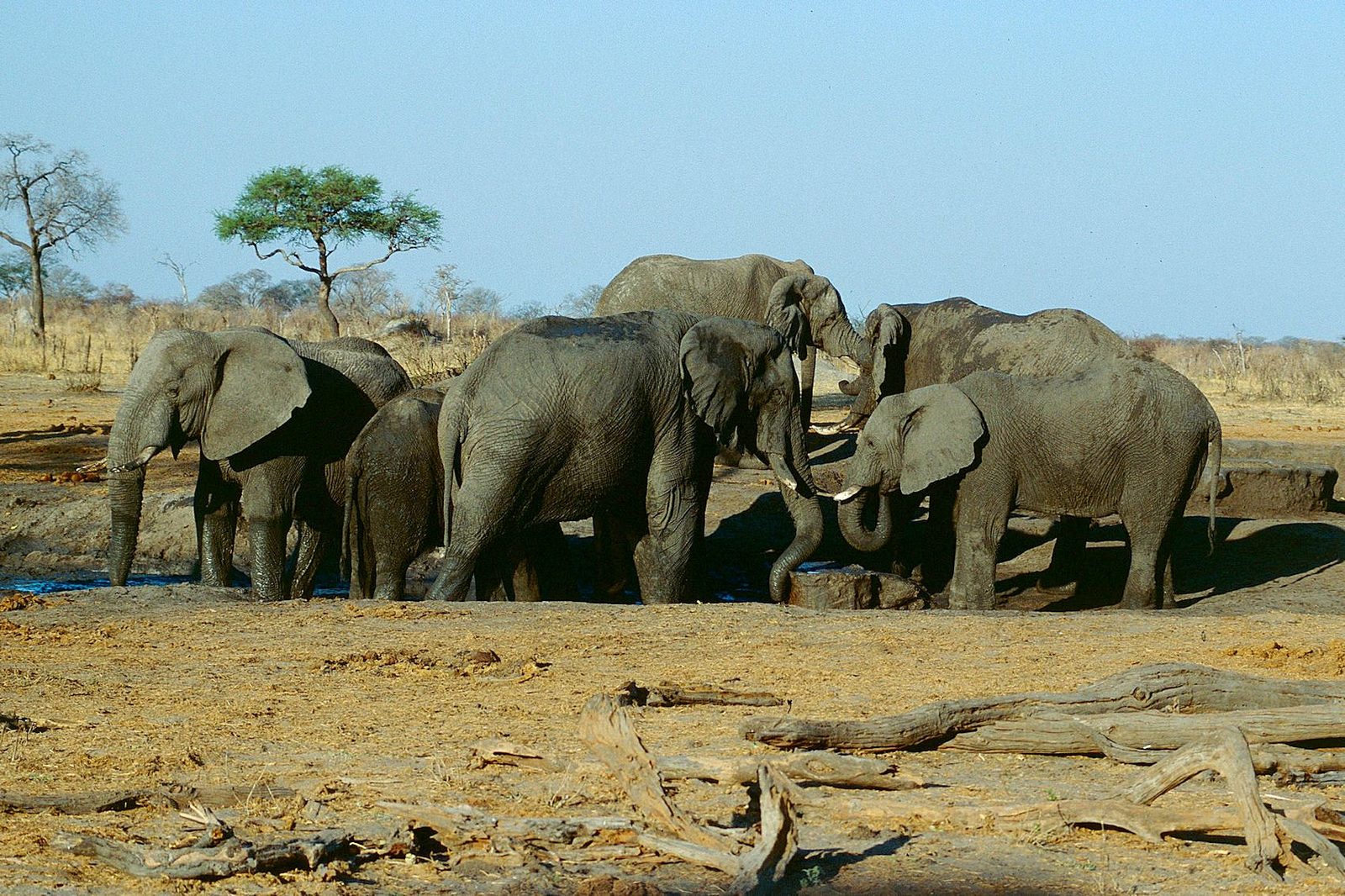
Elephants walking out of the teak towards water. Everything you need for a first Hwange safari, from the drive north to what to pack.
By BlueRoof · 20 October 2026 · 4 min read
A Hwange National Park safari is one of the great journeys from Bulawayo. Zimbabwe's largest park covers around 14,600 km², lies three and a half to four hours away by road, and is famous for its elephants.
There are tens of thousands of them, and waterholes where, in the dry season, you can sit for an hour and watch the whole of the bush come to drink.
The first time you see a breeding herd walk out of the teak woodland towards water, you will probably forget to take a photograph. That is fine. Some moments are better kept than captured.
Why visit Hwange National Park?
Hwange is big, wild and wonderfully varied. Kalahari sand, mopane and teak woodland and open grassland stretch towards the Botswana border, home to more than 100 mammal species and around 400 kinds of birds.
The elephants are the headline. Hwange holds one of the largest elephant populations in Africa, and in the dry months they gather in astonishing numbers. But stay a while and the park reveals more: lions resting in the shade, painted wolves, sable antelope with their sweeping horns, giraffe, buffalo and, if luck is on your side, a leopard draped along a branch.
How far is Hwange from Bulawayo?
Hwange sits on the main road between Bulawayo and Victoria Falls, which makes it an easy place to break the journey north.
- Bulawayo to Hwange Main Camp: roughly 3.5–4 hours by road.
- Hwange Main Camp to Victoria Falls: roughly 2.5–3 hours.
- The park itself: allow time. Speeds are low, roads can be sandy, and the best sightings happen when you stop and wait.
Many travellers spend a night in Bulawayo, set off at first light and reach the park gate in time for an afternoon game drive. If you do, check gate opening and closing times and current fees with Zimbabwe Parks and Wildlife before you leave.
When is the best time for a Hwange National Park safari?
The dry season, roughly July to October, is the classic time. Water becomes scarce, animals concentrate around the pans and waterholes, and the bush thins out so sightings are easier. Days are warm and dry; early mornings in July can be surprisingly cold, so pack a warm layer for open vehicles.
The green season, roughly November to April, is softer and quieter. Rain brings new grass, newborn antelope and migrant birds, and the park feels lush and alive. Animals spread out, so sightings take more patience, but the light and the skies are extraordinary.
What does a day on safari feel like?
It starts in the dark. A flask of coffee, a blanket over your knees, the engine ticking over while the sky turns from black to lilac. The first hour is mostly listening: a francolin calling, the snap of a branch somewhere off to the left, the deep, unhurried breathing of something large. By mid-morning you have learned to read the road for fresh tracks. By afternoon you are parked at a pan, watching elephants arrive in a long grey line, calves trotting to keep up. And at dusk, driving back with the windows down, you realise you have not checked your phone all day.
What should you pack for Hwange?
| Pack this | Why |
|---|---|
| Neutral-coloured clothing | Blends in and keeps dust and insects less obvious |
| A warm fleece or jacket | Open-vehicle mornings are chilly in winter |
| Binoculars | Turns a distant shape into a lion |
| Sun hat and sunscreen | The Kalahari sun is fierce |
| Insect repellent | Hwange is a malaria area; ask your doctor about prevention before travel |
| Cash in small US notes | Useful for fees, tips and rural shops |
Self-drive or guided?
Both work. Self-driving gives you freedom to sit at a waterhole for as long as you like, and the main roads around Main Camp are manageable in a sturdy vehicle. A guided game drive, though, puts you beside someone who reads the bush like a book: tracks in the sand, alarm calls in the trees, the way a herd moves when something is watching. If it is your first safari, book at least one guided drive. You will see more, and you will understand what you are seeing.
A few rules of the road in the park
- Stay in your vehicle unless you are at a marked, safe area.
- Give elephants space, especially mothers with calves, and never block their path.
- Keep to the speed limit and the park's opening hours.
- Take all litter out with you.
Start your safari in Bulawayo
A safari is better when it begins slowly. Spend a night at BlueRoof in Manningdale, swim, sleep well and leave rested with a full tank. Check-in is from 14:00 and checkout by 10:00, or ask reception about an early departure.
See our rooms and suites or check availability. Continuing north? Our guide to travelling from Bulawayo to Victoria Falls picks up where this road leaves off.
Cover photo: Herd of elephants in Hwange National Park, by Jürgen Kehrberger via Wikimedia Commons, CC BY-SA 3.0.
Frequently asked questions
- How far is Hwange National Park from Bulawayo?
- Hwange Main Camp is roughly three and a half to four hours' drive from Bulawayo on the main road towards Victoria Falls.
- When is the best time for a Hwange safari?
- July to October is best for game viewing, when animals gather at waterholes. November to April is greener and quieter, with newborn animals and migrant birds.
- Can you self-drive in Hwange National Park?
- Yes, the main roads around Main Camp suit a sturdy vehicle. Stay in your car, give elephants space and keep to park hours. A guided drive is recommended for first-timers.
- Is Hwange a malaria area?
- Yes. Speak to a doctor or travel clinic about malaria prevention before you travel, and use insect repellent at dawn and dusk.
HwangeSafariElephantsWildlife
Make BlueRoof your base
Quiet rooms in Manningdale, Bulawayo, with a pool to come home to after a day out.